Every few years a licensing model comes along that changes the buy-versus-build math for an entire category. Ignition’s per-server, unlimited-tag, unlimited-client pricing did that for SCADA, and it’s now doing something similar to the MES conversation. If you can put HMI, historian, alarming, and now a full Perspective-based web UI on one licensed platform, the next question a plant manager asks is obvious: why not build the MES layer there too, instead of writing a check for Opcenter, Plex, or AVEVA MES?
It’s a fair question, and for a meaningful slice of manufacturers the answer is genuinely “you can, and it works well.” For others, it’s a slow-motion integration headache wearing a low-cost disguise. The trick is knowing which shop you are before you commit.
What “Ignition as MES” actually means
Inductive Automation makes Ignition, the SCADA/industrial application platform, and licenses it through independent module developers as well as its own team. Ignition itself is not an MES. What turns it into one is a set of add-on modules, most notably from Sepasoft, which builds OEE, Track & Trace, SPC, and Recipe/Batch modules that snap into the Ignition platform, and CIRRUS Link, which is the reference implementation behind MQTT Sparkplug B and handles a lot of the data-plumbing side of tying edge devices and remote sites back into a central Ignition instance.
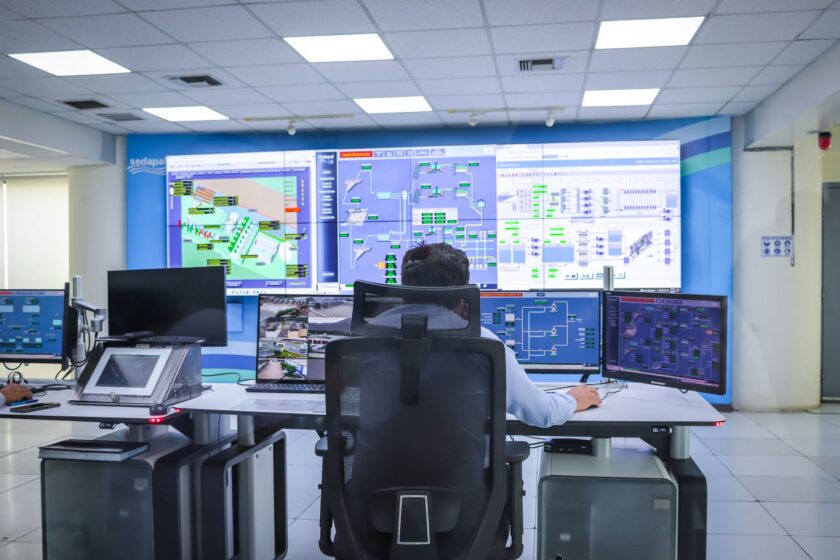
Put those together and you get real MES capability: OEE calculation and downtime reason tracking, genealogy and lot traceability, statistical process control charting, and increasingly capable Perspective-based operator screens that run in a browser on the plant floor. It’s not a toy. Sepasoft’s modules in particular have been in production manufacturing environments for a long time and have real depth in the OEE and traceability workflows that most discrete and batch plants actually need day to day.
Where this approach is genuinely strong
The case for Ignition-plus-modules is strongest when a plant already has Ignition running SCADA and wants to extend it rather than bolt on a second system with its own server, its own database, and its own integration layer. A few things make this approach legitimately competitive with standalone MES, not just cheaper:
- One data model, one historian. If your process data already lives in Ignition’s tag structure, building OEE and SPC on top of it avoids a whole category of integration work that standalone MES platforms require — namely, getting machine and PLC data into their world in the first place.
- Web-native operator UI. Perspective’s browser-based screens mean the same MES workflows can render on a plant-floor panel, a tablet, or a supervisor’s laptop without separate client licensing gymnastics.
- Incremental adoption. You can turn on OEE for one line, prove it out, then add Track & Trace later, without a phased MES rollout project with its own budget line and steering committee.
- Cost predictability at the platform layer. Ignition’s licensing model means adding tags, screens, and users doesn’t multiply your platform cost the way per-seat or per-connection licensing sometimes does elsewhere. The module costs and integration labor are real, but the base platform economics are straightforward.
Where the unlimited-tag story quietly stops being true
“Unlimited tags” describes licensing, not effort. The work that standalone MES vendors have already done — ISA-95 data models, multi-site scheduling logic, validated genealogy for regulated industries, built-in integration to ERP and quality systems — doesn’t disappear just because your SCADA platform is cheap to scale. It gets pushed onto whoever configures your Ignition instance, and it stays there as custom logic that someone has to maintain.
A few patterns are worth watching for:
Multi-site scaling is a real design problem, not a licensing checkbox
Ignition scales technically across sites using gateway networks and MQTT/Sparkplug for edge-to-central data movement, and that architecture is solid. But MES concepts like standardized routing, cross-site scheduling, and a single traceability model that means the same thing in every plant have to be designed and enforced by your team. Standalone MES suites bake a lot of that structure in by default; with Ignition modules, you’re the one deciding whether Plant B’s downtime codes match Plant A’s, and whether anyone will notice when they drift.
Module maturity varies by function
OEE and downtime tracking in Sepasoft’s toolset is mature and widely deployed. Track & Trace and genealogy get more demanding fast once you’re dealing with regulated industries, complex bill-of-materials structures, or serialization requirements that a dedicated MES like Opcenter or Plex has spent years hardening against edge cases. SPC is solid for control charting but doesn’t carry the same breadth of statistical and quality-management workflow that some quality-focused MES/QMS suites offer out of the box.
Who actually supports the logic when it breaks
This is the question that gets skipped in the RFP and shows up eighteen months later. With a standalone MES, the vendor supports the MES logic — the scheduling engine, the genealogy model, the OEE calculation — because it’s their product. With Ignition plus modules, you’ve got three parties in the support chain: Inductive Automation for the platform, Sepasoft or CIRRUS Link for the module, and your own integrator or in-house team for the configuration and custom scripting that stitches it together. When an OEE number looks wrong at 2 a.m., figuring out which layer owns the bug is on you, not a single vendor’s support line.
A scoring checklist before you commit
Score each item honestly rather than aspirationally. If you’re weak on three or more, lean toward a standalone MES or a hybrid approach where Ignition handles SCADA/visualization and a dedicated system handles the MES logic.
- Do you already have Ignition deployed as your SCADA platform, with clean tag structures, at scale?
- Is your traceability requirement genealogy-and-lot-tracking, or full regulated serialization with audit trail obligations?
- Do you operate one site or a handful of similar sites, or a multi-site network needing standardized cross-plant reporting?
- Do you have in-house or contracted Ignition/Perspective scripting talent who can own this long-term, not just implement it once?
- Does your quality system need deep SPC/QMS integration, or is control-chart-level SPC enough?
- Can you tolerate being the integrator of record between platform, module vendor, and your own configuration when something breaks?
- Is your ERP integration need simple (order/lot data in and out) or deep (real-time scheduling, capacity, and finance ties)?
The bottom line
In our assessment, Ignition with Sepasoft and CIRRUS Link modules is a legitimate, production-proven path to MES functionality for single-site and light multi-site manufacturers who already run Ignition, have OEE and traceability as their core MES needs, and have the internal or contracted talent to own the configuration long-term. It’s a poor fit for shops chasing it purely on price, expecting a standalone-MES level of out-of-the-box structure, or operating complex multi-site networks with heavy regulatory traceability demands — those buyers will likely spend the “savings” on integration labor and still end up owning support risk that a platform like Opcenter, Plex, or AVEVA MES would otherwise carry for them. The right question for a 2026 RFP isn’t “can Ignition do MES” — it clearly can — it’s “who on my team is going to own that MES logic five years from now, and are they still going to be here.”
This article was written with the assistance of artificial intelligence. While we aim for accuracy, the information may be incomplete, out of date, or incorrect, and should be independently verified before you rely on it for any decision. It is provided for general information only and does not constitute professional advice.